
Bind them around your neck
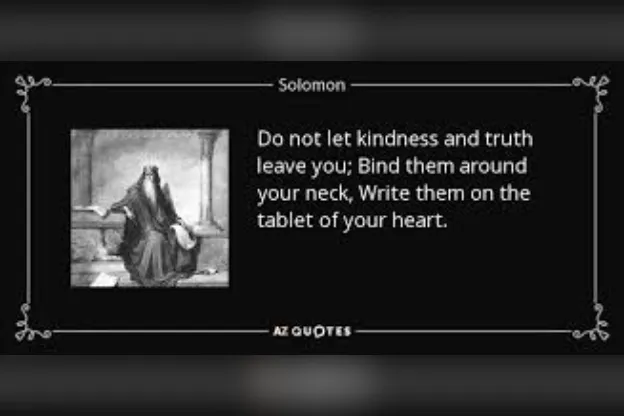
Proverbs 3:3-4
Let love and faithfulness never leave you; bind them around your neck, write them on the tablet of your heart. Then you will win favor and a good name in the sight of God and man.
Who doesn’t want a good name in the sight of God and man and the ability to win favor with them!
At one point in time having a good name meant everything. It meant you had a good reputation! People had a good opinion of you and that is paramount in life, particularly in business. One example the Collins dictionary used from the Sunday Times is, “Then they trade off the company's good name to obtain goods on credit.” Times, Sunday Times (2006)
And what do you need to curry favor and make a good name for yourself?

Let love and faithfulness never leave you.
It’s as easy as that and it is as hard as that!
In Proverbs 3:3 in the NIV the Hebrew word used is checed and it means mercy, loving-kindness, goodness, kindness, faithfulness and is usually all encompassed by the word love. The reason I say encompassed is that there is no precise equivalent word in the English language for checed. The word love is usually used when it refers to God’s love toward man. Bible commentator, N. H. Snaith writes,
“The word is used only in cases where there is some recognized tie between the parties concerned. It is not used indiscriminately of kindness in general, haphazard, kindly deeds; this is why Coverdale was careful to avoid using the word 'kindness' in respect of God's dealings with his people Israel. The theological importance of the word chesed is that it stands more than any other word for the attitude which both parties to a covenant ought to maintain towards each other.”

That is why it is essential to have both love and loyalty together in our dealings with others.
Ultimately you need to live in the present, be conscious of all you do, and always do the right thing.
The other Hebrew word that is in the line is ‘emeth, and in our definition means truth. John J. Parson writes that, “The Jewish sages sometimes say “the seal of God is truth,” since the final letters of the three words that conclude the account of creation – bara Elohim la’ascot (“God created to do”) Genesis 2:3 – spell emet. And further on Parson writes, The Hebrew mind is more focused on the dynamic, the changing, and the idea that truth involved the formation of the character of the person – and the restoration of the world. Which now leaves the onus on us. The sages interpreted this as meaning that it our responsibility, as God’s creatures, to complete the “doing” of His Creation and add the h for ‘emeth. In Hebrew, the first, exact middle, and last letter compose the word ‘emeth – it encompasses all things.

Truth is about doing, not being.
Some of the words in the lexicon associated with the meaning of ‘emeth are firmness, faithfulness, truth, sureness, stability, being reliable, true doctrine, and continuance.
Truth is that which is formed by the person and became the character of the person, which is a dynamic state. You need to decide to be truthful in all you do and to do it! Truth is up-close and personal.

How can we love more, be more tolerant, understanding, and accepting?
Loving someone, being loved by someone, and loving yourself is not a given. Thankfully, it can be learned. The world will abound with many wonders and amazing experiences if we;
1. Develop our curiosity – become a child again and be grateful for the ability to explore our surroundings, feelings, and even our reactions.
2. As Dr. Lisa Firestone writes, “Look at What You Do, Not What You Say.” How do you treat others? Do you do what you say you will do? Do you make your mind up about something or someone before you give them a chance? By being more self-reflective, you start the process of refining yourself and your relationships with others and yourself.
3. There are several words in the Bible used for Love, it is that important.
a. Ahab – intensely close emotional bonds.
b. Agapao – unconditional love.
c. Agape – deep appreciation and high regard
d. Phileo – friendship, fondness, affection, delight, and personal attachment
e. Philadelphia – brotherly love
f. Part of the Greatest Commandment was “love your neighbour as yourself”. Anyone beside you, around you, you encounter, or a person you haven’t met is a neighbour.
4. Katherine Hurst shares the idea, “Forgive Yourself for Your Mistakes. Reflecting on your mistakes can help you to forgive and forget. If you can look back at some poor choices you may have made, and forgive yourself, you can start to move on and forget about the past. Loving yourself despite any mistakes you made in the past is great for your self-worth.
a. realize that the past is in the past
b. recognize unrealistic expectations
c. identify the hurt
d. embrace self-acceptance
e. put things into perspective
f. do not be afraid to start anew
g. look after yourself
h. say no when you need to

How can we take steps to be totally truthful?
1. Make the decision to be truthful – it all starts with you.
2. Make your actions match your words – do what you say and say what you mean.
3. Always take a moment for reflection before you say or do something.
4. Steve Handel shares that you should be straightforward – don’t over analyze.
5. Own up to what you really want to do or see happen.
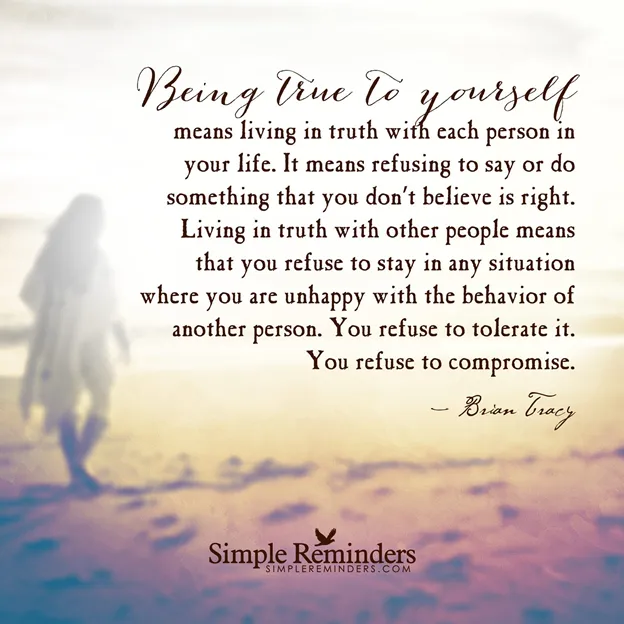
It all boils down to
you doing what you need to do
to stay true
to you

Chuck Groot is an author, speaker, teacher. His love of God has spanned over 6 decades and he finds the more he studies the Bible, the less he knows, the more he succeeds the more dependant on God he becomes, and that there is nothing outside of loving God our Father and being loved in return.
I would really like your opinions and thoughts, please share them in the comments section below. Also, if you liked the article please share it

FOLLOW US


